Introduction
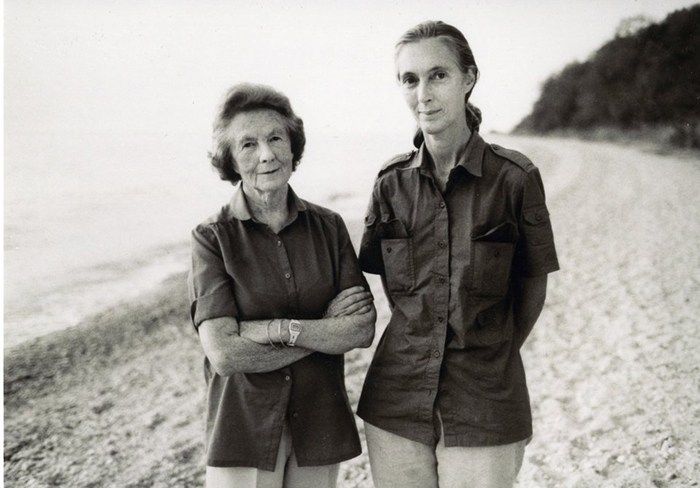
She rarely steps into the spotlight, yet her quiet strength shaped one of the most celebrated naturalists in history. Vanne Morris Goodall, born Margaret Myfanwe Joseph, was more than a mother — she was the emotional backbone and early champion of Jane Goodall’s journey. Her encouragement, presence, and courage deserve recognition in their own right.
Early Life and Background
Vanne Morris Goodall was born Margaret Myfanwe Joseph (sometimes called “Vanne”) in the early 1900s (sources differ). She reportedly came from a Welsh or Pembrokeshire family connection on her mother’s side. She grew up in London before marrying Mortimer Morris-Goodall.
Her upbringing is less documented than her daughter’s, but what stands out is her role as a domestic matriarch and encourager. In a time when women’s roles were constrained, she evidently cultivated an environment where curiosity was nurtured rather than stifled.
Family, Parents, and Siblings
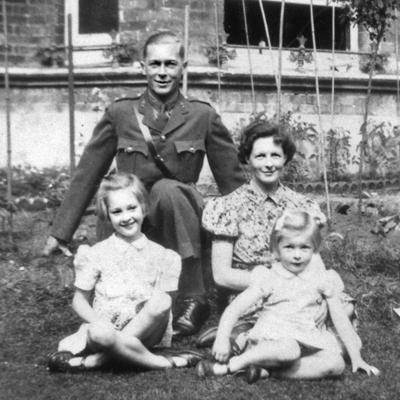
Vanne married Mortimer Herbert Morris-Goodall, a businessman and sometimes-race car driver, in what became a union blending art and engineering. Their children included Valerie Jane Morris-Goodall (Jane) and Judith (Judy), her younger sister. Jane and Judy grew up in a household dominated by women — a mother, a grandmother, and aunts.
When Mortimer was away during the wars, Vanne left with her daughters and returned to her family home in Bournemouth. Later, the marriage dissolved: Mortimer asked for a divorce in 1950, leaving behind an uneasy separation that shaped their family dynamics.
Education
There is no strong public record of Vanne’s formal higher education. She was often described as a “housewife with no formal training or skills,” especially in the context of the play Have You Met Jane Goodall and Her Mother? where Jane jokes she had no choice but to bring her mother along to Gombe because of institutional requirements.
However, that lack of formal schooling did not prevent her from being intellectually and emotionally present — she supported bookish curiosity, encouraged reading, and nurtured Jane’s early questions about nature.
Career or Profession
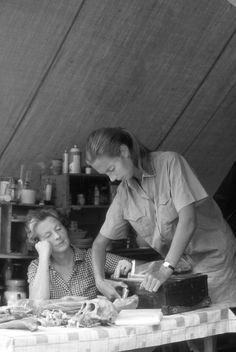
Vanne did not appear to have a high-profile public career. Her role was largely domestic, as mother, mentor, and advocate for her daughter’s ambitions. But she played an active part in Jane’s early life, sometimes accompanying her to Africa as a chaperone when local authorities required it, despite her lack of scientific training.
In 1960, when Jane first traveled to Gombe, Vanne joined her, officials insisted on a chaperone. Vanne’s presence allowed Jane to stay in the field, making her one of the rare mothers who directly witnessed the opening chapter of her daughter’s legendary work.
Relationship or Personal Life
Vanne and Mortimer’s marriage had ups and downs. The war years put distance between them. Upon Mortimer’s return, he reportedly asked Vanne for a divorce in 1950. She remained the main caregiver and emotional anchor for Jane and Judy.
Despite limited means, Vanne supported Jane’s unconventional dreams. When Jane expressed a desire to go to Africa, at a time societal expectations for young women were more limited, Vanne did not discourage her. She later recalled encouraging Jane: “If you really want this, you’ll find a way.”
Her relationship with Jane remained close. Jane frequently cited her mother’s support as essential to her confidence and persistence.
Net Worth
There is no evidence that Vanne Morris Goodall amassed independent wealth. Her life was not about financial success, but about emotional investment and generational influence. Her value lies not in money, but in legacy, the daughter she raised and the impact that daughter had on science and conservation.
Interesting Facts
-
Chaperone to Gombe: Local authorities would not allow Jane into Gombe without a chaperone, so Vanne joined her in 1960, giving crucial moral and physical support.
-
The henhouse experiment: As a child, Jane hid in a henhouse to observe egg-laying. Vanne, instead of scolding, listened and asked questions — an early lesson in curiosity and acceptance.
-
Quiet influence: Though little remarked upon, Jane later credited her mother’s encouragement as foundational. Her bold pursuits were not made in isolation.
-
Creative legacy: Vanne’s mother (Jane’s grandmother) was a trained secretary and likely influenced Vanne’s capacity for organization and written support behind the scenes.
Social Media Presence
Vanne Morris Goodall passed away before the age of social media. She has no public profiles. Her presence lives in archival photos, family memoirs, and Jane’s public reflections.
Recent News or Updates
-
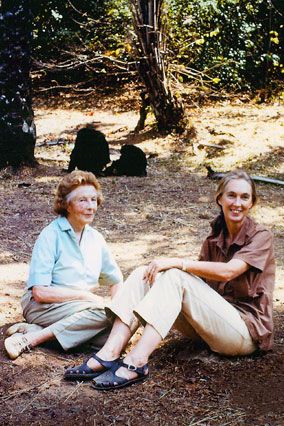
With Jane Goodall’s recent passing in 2025, many obituaries and retrospectives have revisited Vanne’s role. In those articles, she is identified as Margaret “Vanne” Myfanwe Joseph, Jane’s mother, whose belief in Jane’s dream helped shape her path.
-
Obituaries highlight Vanne’s background: after her husband (Mortimer) asked for a divorce post-war, she raised Jane and Judy mostly on her own.
-
In the 2017 film Jane, Vanne appears as a character, showing how her moral and literal presence in Africa supported Jane’s early fieldwork.
Why Vanne Morris Goodall Matters
In biographies of famous people, mothers sometimes fade into footnotes. But Vanne Morris Goodall is a vital thread in the story of Jane Goodall’s life. She listened, encouraged, held steady, and walked beside her daughter when the rest of the world doubted. Her influence is subtle but deep — and through Jane’s legacy, Vanne’s love continues to breathe in every corner of conservation, curiosity, and courage.
FAQ
Q: Who was Vanne Morris Goodall?
A: She was Jane Goodall’s mother, born Margaret Myfanwe Joseph (pen name Vanne), and a quiet but formative influence on Jane’s life and ambitions.
Q: Did she accompany Jane to Africa?
A: Yes — in 1960, when Jane began her chimpanzee studies in Gombe, authorities required a chaperone. Vanne joined to support her daughter’s mission.
Q: Did Vanne have formal scientific training?
A: No known scientific or academic credentials. Her contributions were emotional, moral, and logistical rather than scholarly.
Q: When did she pass away?
A: I could not locate a reliable, specific date for her passing in available sources.
Q: How did her relationship with Jane influence Jane’s work?
A: Jane often credited her mother’s encouragement and willingness to accept Jane’s unconventional dreams as foundational to her confidence and perseverance.
Leave a Reply